← Technology, Science & Infrastructure
▣ Distilled locally
Put AI on the Menu with This DIY Calorie Tracker
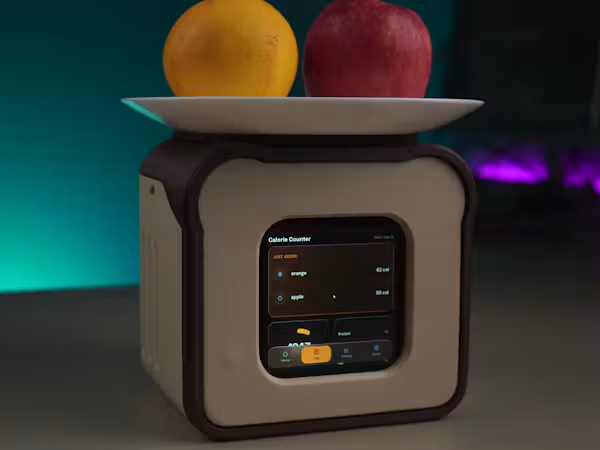
Keeping track of how many calories you consume each day can be a good way to manage your weight and monitor your nutritional intake. Unfortunately, doing so can also be a hassle. Even with modern smartphone apps that can recognize food from photographs, you still have to pull out your phone, open an app, and remember to log every meal. That's enough of an inconvenience that many people eventually stop bothering. To make the process easier, Coders Cafe built a dedicated AI-powered calorie tracker that can identify food and estimate its caloric content by looking at what's on a plate. The device runs its computer vision models locally, so it doesn't need to send images to a cloud server for processing. The project is built around the D-Robotics RDK X5 single-board computer, which comes equipped with an octa-core Arm Cortex-A55 processor running at 1.5 GHz, up to 8 GB of RAM, and a dedicated Brain Processing Unit (BPU) capable of delivering 10 TOPS of AI performance. That last feature is particularly important because it allows the system to run computer vision models without relying on a desktop GPU or cloud-based service. A D-Robotics binocular stereo camera connects to the board through its MIPI-CSI interface and captures images of the food. The creator initially experimented with a YOLOv9 object detection model from the RDK Model Zoo, which provides precompiled models optimized for the board's BPU. However, simply identifying each food item wasn't enough to get this project working. Instead, the creator implemented a segmentation model that identifies the pixels belonging to individual foods. This allows the system to not only distinguish between different items on a plate, such as a sandwich, banana, broccoli, and slice of cake, but also determine the size of each. The detected foods (and the space they occupy) are then used to estimate calorie counts, after which the results are displayed through a custom web-based dashboard. A four-inch Waveshare display provides a convenient way to view the identified foods, estimated calories, and nutritional progress without reaching for a smartphone. With the electronics and software working, the next step was packaging everything into something suitable for a kitchen counter. The creator designed a custom, 3D-printed enclosure inspired by a loaf of bread, complete with beige and chocolate-brown coloring. Calorie estimates based on images still have limitations, particularly when portion sizes and hidden ingredients are involved. Nevertheless, this project shows that food recognition and nutritional tracking don't necessarily require a smartphone or cloud-based AI service. That could be the key to keeping us tracking our nutritional intake for the long haul. This device automatically tracks the calories you consume (📷: Coders Cafe) The complete system (📷: Coders Cafe) Results from the segmentation model (📷: Coders Cafe)
↑ Back to top
Originally published by Hackster News ↗
· rebuilt here from its own full-text RSS feed · all rights
remain with the publisher, please read and support them there.