← Technology, Science & Infrastructure
▣ Distilled locally
The Camera That Doesn’t Take Photos — It Finds Them
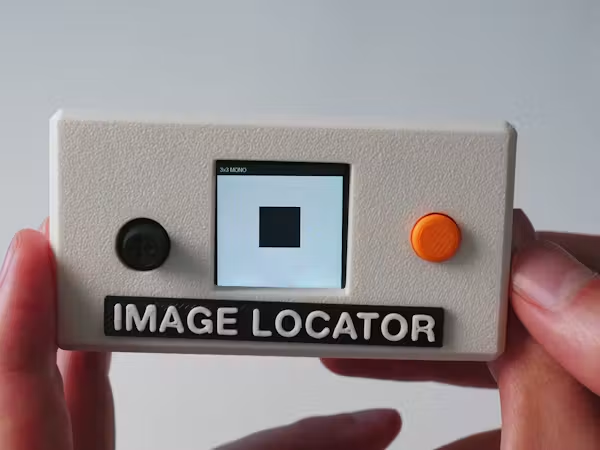
Digital cameras generally do pretty much what you'd expect: capture an image and store it for later viewing. Strange Inventions built one that works very differently. His Image Locator Camera is based on the idea that every possible digital photograph already exists mathematically, so instead of saving a new image, it tells you where to find that image in a theoretical library containing every possible picture. This works because a digital image is ultimately just a collection of pixels, and there are only a finite number of ways those pixels can be arranged. Strange Inventions demonstrates the concept using an extremely low-resolution 3×3 monochrome image. With nine pixels that can each be either black or white, there are only 512 possible combinations. That's few enough to put them all into a book, so Strange Inventions generated every possible 3×3 monochrome image and created a 512-page image library containing one pattern on each page. The handheld camera can then look at a scene, convert it into nine black or white pixels, and tell you exactly which page contains the resulting image. Despite what the name might suggest, the Image Locator Camera doesn't actually search through anything. Each black or white pixel can be represented by a one or zero, turning the complete 3×3 image into a nine-bit binary number. That number can then be converted into the corresponding page address. There is no database of hundreds of images sitting on the device. The hardware is built around a Raspberry Pi Zero W connected to an OV5647 camera module. An Adafruit 1.3-inch Color TFT Bonnet provides a 240×240 pixel display, joystick, and buttons, while a Waveshare UPS HAT supplies portable power. The modules are stacked together and installed inside a custom 3D-printed enclosure to create the finished handheld camera. If the Image Locator Camera were built for higher-resolution images, things would quickly spiral out of control. Moving from 3×3 to 4×4 monochrome images increases the number of possibilities from 512 to 65,536, requiring 128 books of the same size. An 8×8 monochrome image has more than 18 quintillion possible arrangements. Add millions of colors and modern camera resolutions and physically building the complete library becomes impossible. The math still works, however, and the Image Locator Camera includes several monochrome and RGB modes that demonstrate the concept without requiring the corresponding physical libraries. If you'd like to build one, Strange Inventions is selling the complete project files for about $21. The package includes the Raspberry Pi Python source code, original FreeCAD design, printable STL files, hardware list, image library generator, and a PDF containing all 512 possible 3×3 images. Expect to spend around $80 on the electronic and mechanical components, and another $72 if you really want that 512-page library sitting on your bookshelf.The Image Locator Camera (📷: Strange Inventions) The encoding of a 3x3 monochrome image (📷: Strange Inventions)
Originally published by Hackster News ↗
· rebuilt here from its own full-text RSS feed · all rights
remain with the publisher, please read and support them there.
↑ Back to top
© 2026 PaperWeb. Content remains property of respective publishers. · Privacy Policy · Terms