BepiColombo Enters Orbit Around Mercury Despite “Software Glitch”
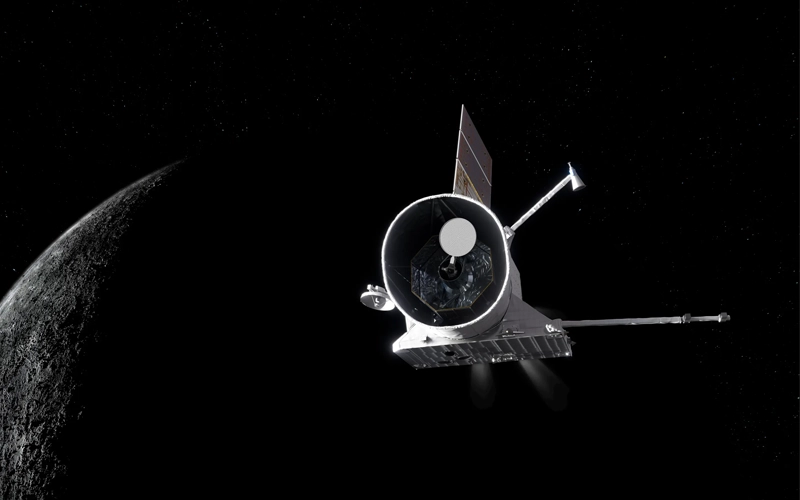
The European Space Agency’s BepiColombo mission has successfully entered orbit around Mercury despite a software glitch that resulted in a shorter-than-planned thruster burn.
According to the agency’s 23 November update, the BepiColombo spacecraft reoriented itself at 17:51 CET on 21 November, resulting in a planned loss of communications with Earth. At 19:24 CET, the spacecraft fired its four chemical thrusters as it passed approximately 635 kilometres above Mercury’s surface. The burn was scheduled to last 37 minutes, with communications expected to resume at 22:37 CET. However, the agency did not publicly confirm that contact had been re-established until 03:02 CET on 22 November.
In its initial update, the agency confirmed that the spacecraft had achieved orbital capture around Mercury and that ground teams were assessing telemetry. According to ESA’s subsequent account of the manoeuvre, orbital capture had been confirmed internally at approximately 01:00 CET. It was not until 20:15 CET on 22 November that the agency revealed that the thruster burn had been shorter than planned due to a software issue.
In a more detailed breakdown published on 23 November, ESA explained that when it re-established contact with the spacecraft, teams discovered that it had entered safe mode.
“Upon finding Bepi in safe mode, it was like flipping a switch. Everybody was focused in understanding what had happened,” said ESA’s BepiColombo flight operations director Ignacio Tanco.
Teams at ESA and spacecraft manufacturer Airbus have traced the anomaly to a software issue affecting the spacecraft’s orientation and thruster control, although investigations are ongoing. According to ESA, the burn achieved just 77% of its intended change in velocity. While this did not prevent the spacecraft from achieving orbital capture, it entered a 75-hour orbit around Mercury instead of the planned 58-hour orbit.
Despite the shorter-than-planned burn, mission controllers have been able to revise the remaining manoeuvres without adding any additional thruster burns. The next major milestone for the mission is the separation of ESA’s Mercury Planetary Orbiter (MPO) and the Japan Aerospace Exploration Agency’s (JAXA) Mercury Magnetospheric Orbiter (Mio), which remains scheduled for 9 December.
Launched aboard an Ariane 5 rocket on 20 October 2018, BepiColombo was initially expected to enter orbit around Mercury in December 2025. However, an electrical issue affecting the spacecraft’s electric propulsion system, discovered in April 2024, forced ESA to adopt a revised trajectory, delaying its arrival by almost a year.
Following the separation of its two orbiters in December, BepiColombo will become the first mission to operate two spacecraft simultaneously in orbit around Mercury. The mission’s primary science operations are expected to begin in April 2027.