← Technology, Science & Infrastructure
▣ Distilled locally
RF Watchkeeper Keeps an Eye on the Airwaves
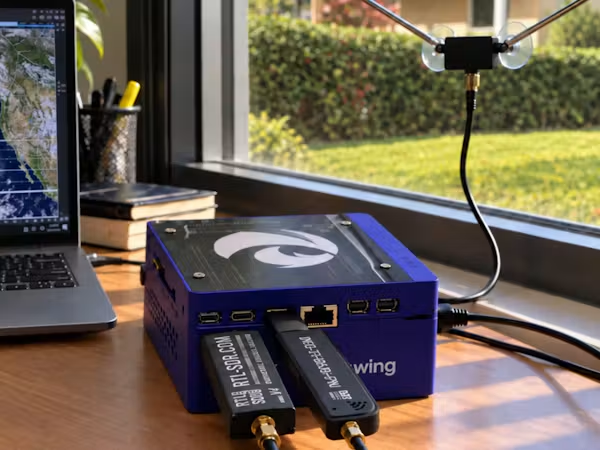
There is a lot of information traveling invisibly through the air around us at any given moment. Aircraft communicate with control towers, ships broadcast their positions, wireless sensors transmit measurements, and weather satellites send images of the Earth. Receiving these signals requires different software and, in some cases, dedicated hardware. Thomas Vikström has developed a system called RF Watchkeeper that brings several of these capabilities together on a single edge computing platform, allowing it to automatically monitor a variety of radio transmissions without human intervention. RF Watchkeeper is built around a Qualcomm Dragonwing IQ-9075 evaluation kit connected to inexpensive software-defined radio (SDR) receivers, including an RTL-SDR Blog V4 and an RTL2832U-based USB tuner. Unlike normal radio receivers, SDRs use software to perform much of the signal processing, allowing the same hardware to receive different types of transmissions by changing frequencies and decoding software. The system currently supports four types of monitoring: aviation communications, maritime traffic, 433 MHz wireless devices, and METEOR weather satellites. Rather than dedicating a receiver to each application, RF Watchkeeper uses a scheduler to allocate the available radio hardware between tasks. Routine monitoring runs at regular intervals, while time-sensitive activities, such as receiving a passing weather satellite, take priority. For aviation monitoring, the system captures control tower communications and Automatic Terminal Information Service (ATIS) broadcasts. ATIS transmissions provide regularly updated information about weather and airport operations, making them particularly good targets for automated processing. RF Watchkeeper can transcribe these broadcasts and extract information locally, although recognition errors can be a problem when reception is poor. Maritime monitoring uses AIS-Catcher to decode Automatic Identification System transmissions near 162 MHz, allowing detected vessels to be plotted on a map. Vikström has also received marine weather reports from stations more than 100 kilometers away. Meanwhile, the software decodes transmissions from compatible wireless sensors, including temperature sensors, weather stations, and tire pressure monitoring systems. Additionally, RF Watchkeeper predicts passes of METEOR satellites, records their transmissions around 137 MHz, and uses SatDump to turn the captured signals into images of the Earth. Reception isn't always good, however, because Vikström operates the system with an indoor antenna. Data processing is accelerated by the Dragonwing IQ-9075, which provides hardware acceleration for local AI workloads. Vikström has verified accelerated inference while other monitoring tasks were running. In one experiment, an accelerated ATIS processing pipeline completed in seconds, compared with more than two minutes for a CPU-only Whisper Small run. However, the pipelines differed, so this wasn't an ideal performance comparison. All of the collected information is stored locally and presented through a web-based dashboard, which also provides an overview of the system's status. RF Watchkeeper is still a work in progress, with some reliability issues to resolve and opportunities to improve reception with better antennas. The project's source code and documentation are available on GitHub for anyone interested in building a similar system.RF Watchkeeper monitors a wide range of radio broadcasts (📷: Thomas Vikström) The system architecture (📷: Thomas Vikström) An image from a METEOR weather satellite (📷: Thomas Vikström)
↑ Back to top
Originally published by Hackster News ↗
· rebuilt here from its own full-text RSS feed · all rights
remain with the publisher, please read and support them there.