How to see Earth’s shadow at sunrise and sunset
EarthSky’s Kelly Kizer Whitt explains how to see Earth’s shadow and the Belt of Venus in this video.
Earth’s shadow is easy to see
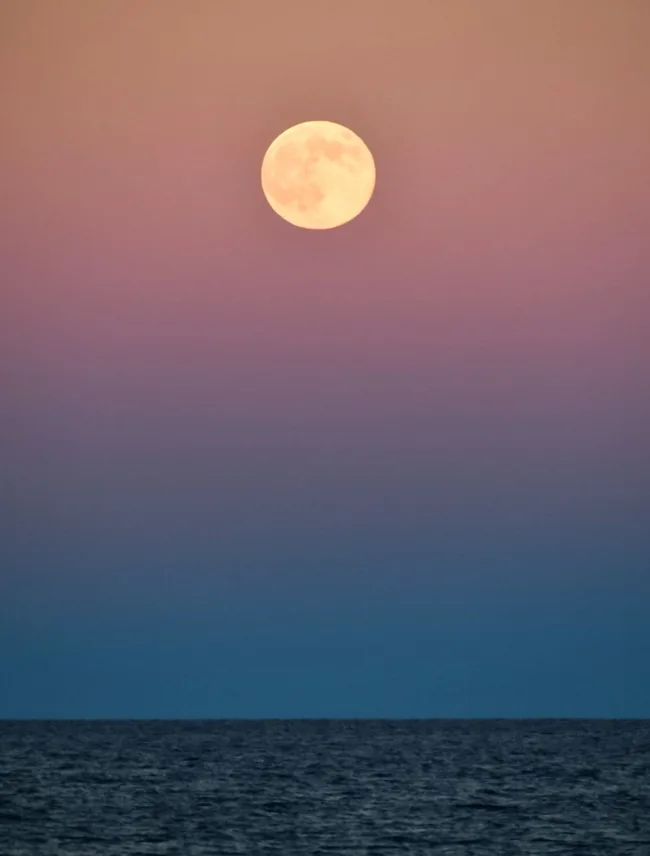
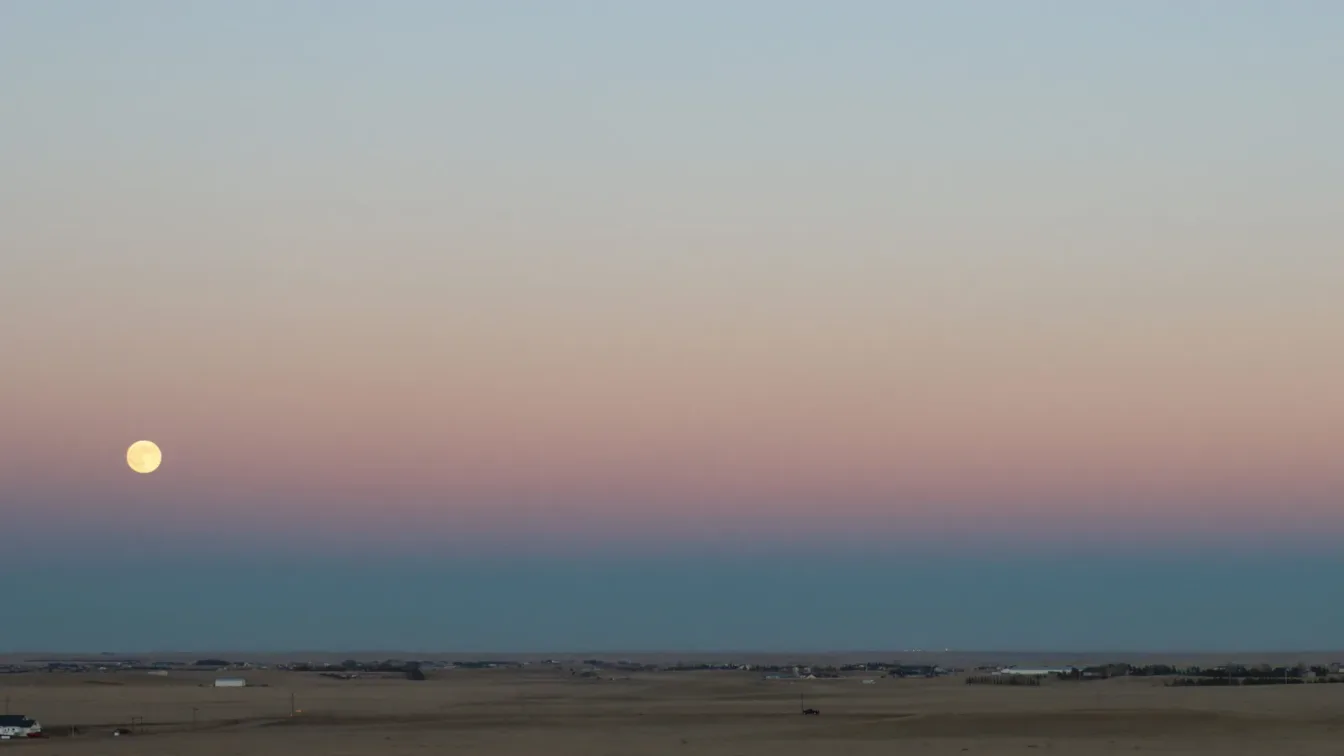
Like all worlds orbiting a sun, Earth casts a shadow. It extends some 870,000 miles (1.4 million km) into space. And you can see the shadow of Earth cast onto our atmosphere twice a day. Just look east after sunset or west before sunrise, and you’ll see it as a bluish band adjacent to the horizon.
The pretty band of pink that lies on top of Earth’s bluish shadow is called the Belt of Venus. More on that below!
Watch the evolution of the Earth's shadow after sunset in this outstanding video by Jan Curtis. You can see more of his work here: https://t.co/cOf2udpGOn pic.twitter.com/cgSLZ3871b
— EarthSky (@earthskyscience) November 14, 2023
What to look for to see Earth’s shadow
You’ll see Earth’s shadow as deep blue-gray. It’s darker than the blue of the twilight sky.
Earth’s shadow is big. It helps to be on a hill or somewhere you have a long view of the horizon. You might have to turn your head this way and that — along the arc of the horizon opposite the sun — to see the whole thing. And, just so you’ll recognize it more easily, remember that the shadow is curved, in exactly the same way that the whole Earth is curved.
Once you spot it, don’t go back inside just yet. Wait a while, and watch Earth’s shadow ascending or descending at exactly the same rate that the sun is rising or setting on the opposite horizon.
And here’s a fun thought … night itself is a shadow. When night falls, you’re standing within the shadow of Earth.
What exactly is the Belt of Venus?
The Belt of Venus, that pink band of sky above Earth’s shadow, also has the name of the anti-twilight arch. So, for example, during sunset, the colors of twilight will be happening in the west, and when you turn to the opposite horizon, you’ll see the anti-twilight arch. You’ve probably noticed that sometimes the whole sky seems colorful at sunset. There’s a good chance that what you’re seeing opposite the sunset is Earth’s shadow and the Belt of Venus.
When the sun is below the horizon, some of the sun’s rays of light still reach our atmosphere. The light passes through our atmosphere and — at the antisolar point — it backscatters. That light then reaches back to us in shades of pink.
You might think that the Belt of Venus got its name from the planet Venus. Venus, orbiting inside Earth’s orbit, never strays far from the sun in our sky. So we often see it around sunrise and sunset. But, of course, the sun is on the opposite side of the sky from the Belt of Venus. So if Venus is visible in the sky, it’s near the sun, not on the opposite horizon.
Instead, like many other objects we know in the sky, it gets its name from ancient myth. The Belt of Venus is named for the goddess of love’s pink girdle.
Our shadow is why we see lunar eclipses
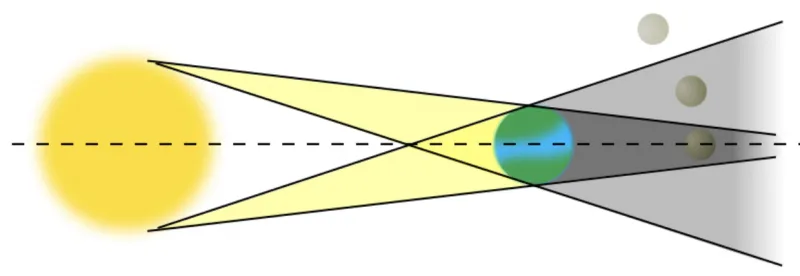
Earth’s shadow extends so far into space that it can touch the moon. A lunar eclipse is when the moon passes through Earth’s shadow.
When the sun, Earth and moon align in space (nearly or perfectly), with Earth between the sun and moon, Earth’s shadow falls on the moon’s face. That’s when people on Earth see the shadow gradually turn a bright full moon into a dark lunar eclipse.
As seen from Earth’s surface, there are typically two or more lunar eclipses every year. Some are total, some are partial, and others are a subtle kind of eclipse known as penumbral.
During a lunar eclipse, a very small amount of light from the sun filters through Earth’s atmosphere onto Earth’s shadow on the moon. That’s why — during the middle of a total lunar eclipse — the shadow on the moon looks reddish.
The view from space
Another way to appreciate Earth’s shadow is simply to see it from space.
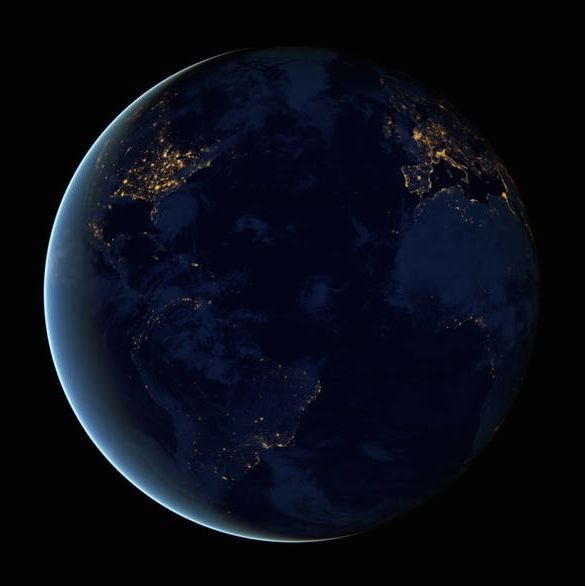
The image below provides a beautiful view of Earth at night. It’s a composite image, assembled from data acquired by the Suomi National Polar-orbiting Partnership (Suomi NPP) satellite over nine days in April 2012 and 13 days in October 2012.
The dark part is, of course, in Earth’s shadow.
Photos of Earth’s shadow
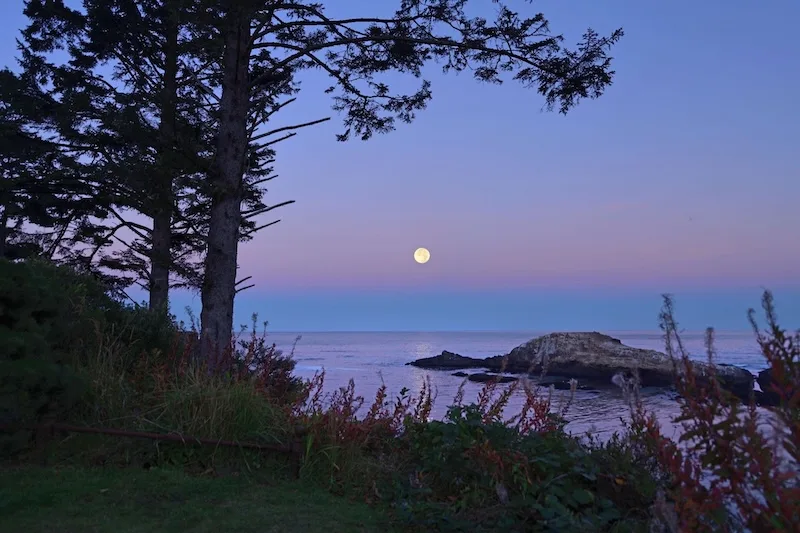
EarthSky’s global community shares amazing photos with us every day. Here are some of their images of Earth’s shadow. Do you have a great photo to share? Submit it here!
More EarthSky Community Photos
Bottom line: You can see Earth’s shadow in both the evening and morning sky. It appears as a bluish band opposite the sun. Above that you may see a pink band, named the Belt of Venus.
The post How to see Earth’s shadow at sunrise and sunset first appeared on EarthSky.