Sun news: The first people to see Venus cross the sun
Sun news November 24: The first people to see Venus cross the sun
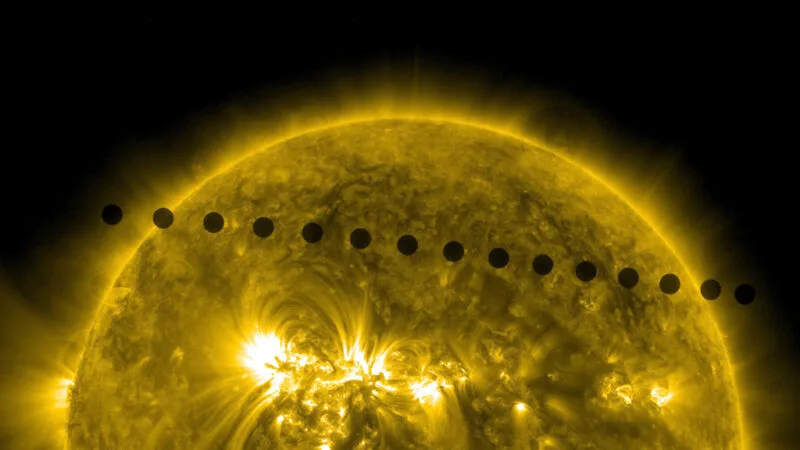
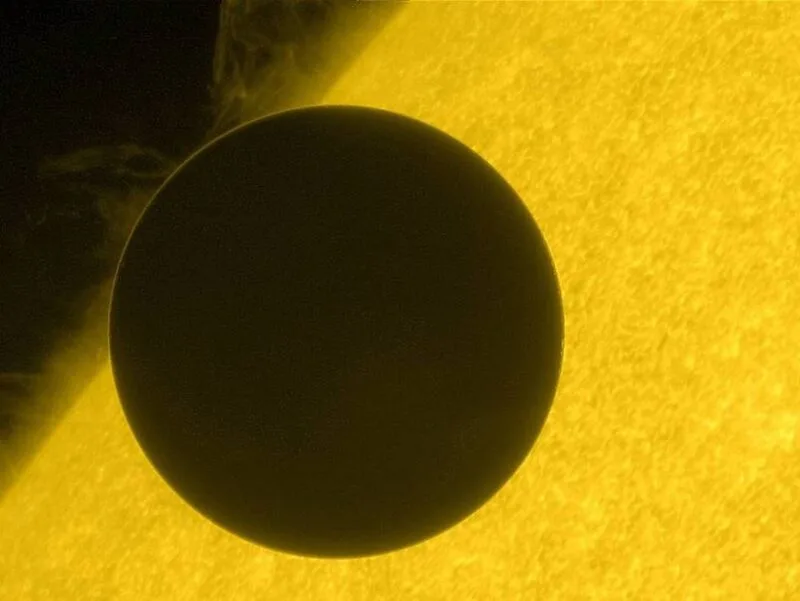
Today’s top story: On this date in 1639, two young Englishmen became the first people ever to watch Venus cross the face of the sun. Jeremiah Horrocks watched from the village of Much Hoole in Lancashire, and his friend William Crabtree watched from his home near Manchester. (England still used the old Julian calendar then, so on today’s calendar, the date was December 4.)
Horrocks was only 20. The great astronomer Johannes Kepler had predicted that Venus would just miss the sun in 1639. But Horrocks checked the math and realized something new: transits of Venus come in pairs, eight years apart. The next one was less than four weeks away! He was the only person on Earth who knew. So he and Crabtree aimed their telescopes at the sun and saw a small black dot slide onto the solar disk. Horrocks called it “the realization of so many ardent desires.”
Transits of Venus are rare. Each pair is separated by more than a century. Modern spacecraft caught the most recent pair, in 2004 and 2012. And the next one won’t happen until 2117!
Past 24 hours on the sun
(11 UTC November 23 – 11 UTC November 24)
Flare activity: Activity was very low. The sun produced 6 flares, all B (weak) class.
- Strongest flare: B3.6 from AR4572, peaking at 23:30 UTC on November 23. Flares this weak cause no radio blackouts.
- Lead flare producer: Active region AR4572 reached the top of the list. It produced 3 of the 6 flares. There are chances these B flares from AR4572 were stronger as they were produced while the active region sits on the far side of our sun just behind the horizon. An active region when positioned like this, the sun itself blocks partially the burst. But a newcomer in the northeast, as-yet-unnumbered, produced 2 B flares.
Sunspot regions: Forecasters count two numbered sunspot regions on the Earth-facing disk. No new regions received numbers but there is a newcomer on the northeast awaiting for a number. It already blasted out two B flares.
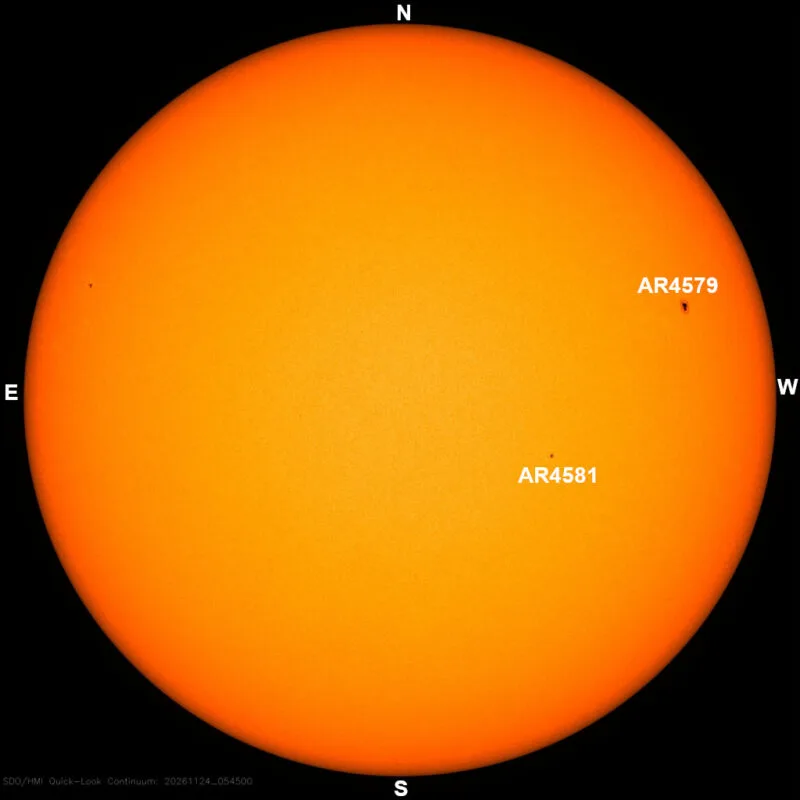
- AR4579 (alpha): The region in the northwest. It showed stable and no flare producer during this period.
- AR4581 (alpha): This wide, open region is now located in the southwest quadrant. It continued to show decay, losing all of its trailing spots. Still, it produced one B2.6 flare.
Blasts from the sun? Observers spotted no Earth-directed coronal mass ejections (CMEs) in the past day. However, the slow November 19 CME could still deliver a weak, glancing blow. Forecasters expect it on November 23, possibly slipping into early November 24.
Past 24 hours in space weather
Solar wind: The solar wind averaged low levels. Registers show it between about 300 and 325 km/s. A large coronal hole now located facing Earth may bring higher solar wind speeds with its correspondent enhancements.
Bt, Bz and magnetic coupling: The total IMF (Bt) showed weak strength. Bz component kept shifting from both to south direction the whole period. But it mostly pointed south and the strongest peaks also showed a south direction. As a result, coupling with Earth’s field was possible. Meanwhile, the solar wind’s magnetic direction flipped, possibly as Earth crossed a boundary between sectors of the sun’s magnetic field.
Earth’s magnetic field: Earth’s magnetic field stayed very quiet, with the Kp index at 0 to 1. That’s well below the G1 (minor) storm level. Any aurora stayed at high latitudes.
What’s ahead? Sun–Earth forecast
Flare activity forecast: Forecasters expect very low activity on November 23-25, with a chance for C-class (common) flares at 20% today. They also see very low chances for M-class (moderate) flares, 1% today. A similar condition for X flares, 1% today. The likeliest sources are AR4581 and AR4579. But there is a newcomer in the northeast.
Geomagnetic activity forecast:
- November 24: Mostly quiet conditions with (Kp 0-2). Isolated active levels possible with a CME arrival bringing unsettled to active levels (Kp 3-4).
- November 25: Mostly quiet conditions are expected (Kp 0-2), with isolated unsettled periods (Kp 3) possible.
- November 26: Mainly quiet conditions are likely. Late in the day, fast wind from a coronal hole could arrive. That opening in the sun’s atmosphere may send a high-speed stream our way, though November 27 looks more likely.
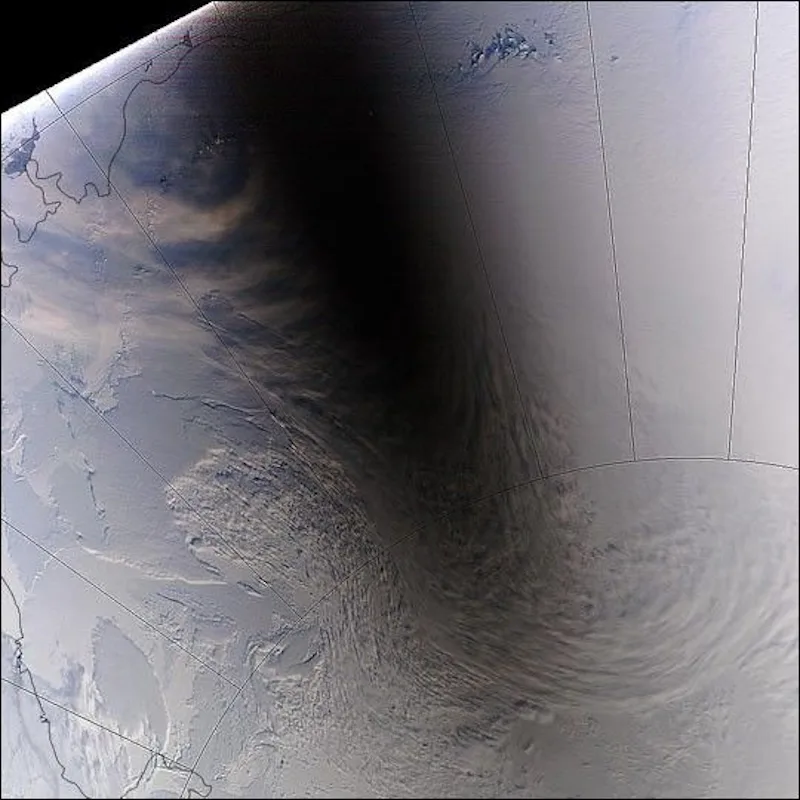
Sun news November 23: On this date, the 1st total solar eclipse seen from Antarctica
Today’s top story: On this date in 2003, a small group of lucky observers witnessed a rare total solar eclipse from Antarctica. Since 1900, only seven total eclipses have crossed the continent, and this was the first one anyone observed.
The moon’s shadow swept over a remote stretch of the Southern Ocean and East Antarctica, taking an unusual path. Most eclipse shadows move east, but this one curved south and then west around the continent.
Clouds obscured the view for most research stations. So about 200 eclipse chasers flew to meet the shadow instead. Two chartered jets cruised above the clouds at about 11 kilometers (7 miles) high. As a result, they enjoyed about 2 1/2 minutes of totality. Meanwhile, astronomers aboard photographed the sun’s faint outer atmosphere, the corona, to compare with views from the SOHO spacecraft.
Past 24 hours on the sun
(11 UTC November 22 – 11 UTC November 23)
Flare activity: Activity was low. The sun produced 4 flares, all B (weak) class.
- Strongest flare: B4.7 from AR4574, peaking at 06:30 UTC on November 23. Flares this weak cause no radio blackouts.
- Lead flare producer: AR4574, with 2 of the 4 flares.
Sunspot regions: Forecasters count two numbered sunspot regions on the Earth-facing disk. No new regions received numbers.
- AR4579 (alpha): This region sits in the northwest. It has simple alpha magnetic complexity, with a single mature spot. It held steady and produced one small B3.2 flare.
- AR4581 (beta): This wide, open region sits near the center of the disk. It showed minor decay, mostly in its trailing spots. Still, it produced one B3.3 flare.
- AR4574: This region sits right on the western limb. It produced the day’s two largest flares. However, it is rotating out of view, so we don’t count it.
Blasts from the sun? Observers spotted no Earth-directed coronal mass ejections (CMEs) in the past day. However, the slow November 19 CME could still deliver a weak, glancing blow. Forecasters expect it on November 23, possibly slipping into early November 24.
Past 24 hours in space weather
Solar wind: The solar wind stayed slow, between about 320 and 400 km/s.
Bt, Bz and magnetic coupling: The total IMF (Bt) stayed at normal levels. Bz dipped slightly south but mostly pointed north. As a result, coupling with Earth’s field stayed weak. Meanwhile, the solar wind’s magnetic direction flipped, possibly as Earth crossed a boundary between sectors of the sun’s magnetic field.
Earth’s magnetic field: Earth’s magnetic field stayed quiet, with the Kp index at 0 to 2. That’s well below the G1 (minor) storm level. Any aurora stayed at high latitudes.
What’s ahead? Sun–Earth forecast
Flare activity forecast: Forecasters expect very low activity on November 23-25, with a chance for C-class (common) flares. They also see a slight chance for M-class (moderate) flares. The likeliest sources are AR4581 and AR4579.
Geomagnetic activity forecast:
- November 23: Quiet to active conditions are possible. A glancing blow from the November 19 CME could push Kp to 4. If it hits, aurora could brighten at high latitudes, such as Alaska, northern Canada and northern Scandinavia.
- November 24: Mostly quiet conditions are likely (Kp 0-2). However, the CME could still arrive early in the day, bringing unsettled to active levels (Kp 3-4).
- November 25: Mostly quiet conditions are expected (Kp 0-2), with isolated unsettled periods (Kp 3) possible.
- November 26: Mainly quiet conditions are likely. Late in the day, fast wind from a coronal hole could arrive. That opening in the sun’s atmosphere may send a high-speed stream our way, though November 27 looks more likely.
The sun in recent days
Sun images from our community
More sun images from our community
We sometimes feature sun images obtained using hydrogen-alpha filters. Read why.
Bottom line: Sun news November 24, 2026: NASA’a Solar Dynamic Observatory captured Venus crossing the face of the sun during its transit of June 5-6, 2012.
The post Sun news: The first people to see Venus cross the sun first appeared on EarthSky.