← Technology, Science & Infrastructure
▣ Distilled locally
Researchers Turn Paper, Bio-Oil Byproducts Into Strong, Stiff Carbon Fiber
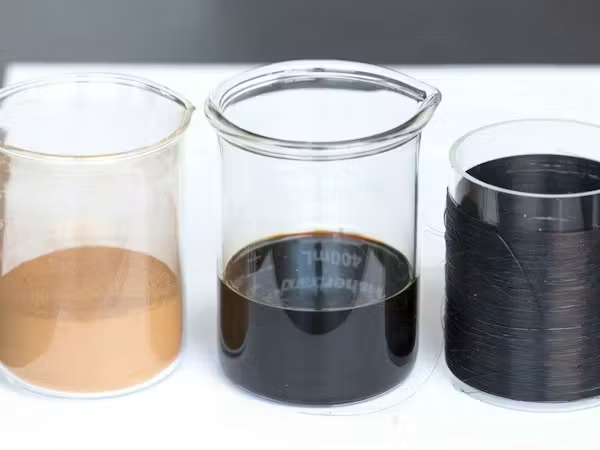
Researchers at Iowa State University have come up with a way to turn low-value byproducts from the production of paper and bio-oil into valuable carbon fiber — avoiding the usual use of pricey petroleum-based precursors and their environmental impact. "We’re taking lignin, considered a low-value byproduct of the paper and pulp industry, and aqueous bio-oil, also considered to be a low-value product," explains Xianglan Bai, professor of mechanical engineering and associate director of Iowa State's Bioeconomy Institute, "and putting them together to come up with a high-value product. This is where chemistry and materials science beautifully meet." Carbon-fiber-reinforced plastics, which offer a valuable combination of strength and stiffness combined with a low weight, are used in everything from aircraft and wind turbine blades to racing bikes and laptop chassis. They're relatively expensive to make, however, and come with a high environmental impact thanks to the typical use of petroleum pitch as a precursor. Bai and colleagues' answer to the problem is to drop the typical precursors in favor of byproducts from existing manufacturing processes: softwood craft lignin, a byproduct of paper production; and a watery fraction of bio-oil, produced when corn, wood, and other biomass is broken down via fast pyrolysis to produce heating oil. While they're not the first to produce bio-based carbon fiber, the researchers claim to have surpassed the quality of previous efforts — to the point it can be considered a drop-in replacement for traditional manufacturing approaches. The team's experiments yielded a carbon fiber with a tensile strength of up to 2.45 gigapascals and a stiffness of up to 236 gigapascals, both easily exceeding the recommended specifications for automotive carbon fiber set by the U.S. Department of Energy. The cost is estimated at under $5 per pound, the researchers say, and the stabilization time during production of spun fiber has been reduced from tens of hours to 2—4 hours. "Commercializing this breakthrough technology could significantly reduce manufacturing costs," the team says, which is the focus of grants supplied by the US National Science Foundation, "while securing a reliable domestic supply of a critical structural material, thereby strengthening U.S. economic competitiveness." More information is available on the NSF website . Researchers Tannon Daugaard (L), Abdulrahman A. B. A. Mohammed, and Xianglan Bai (R) have turned manufacturing byproducts into carbon fiber. (📷: Christopher Gannon/Iowa State University)
↑ Back to top
Originally published by Hackster News ↗
· rebuilt here from its own full-text RSS feed · all rights
remain with the publisher, please read and support them there.