← Technology, Science & Infrastructure
▣ Distilled locally
Raspberry Pi Dogfoods Its Boards, Connected to Home Assistant, As It Plans a Path to "Net Zero"
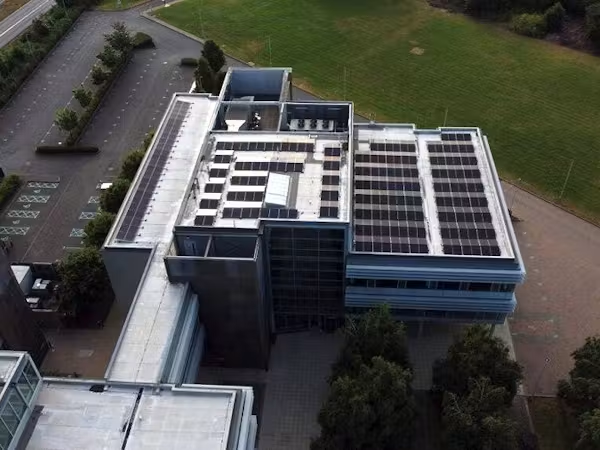
Raspberry Pi has issued a report on progress towards its "net zero" carbon goals, following the installation of solar panels and a program to encourage its employees to switch to electric vehicles — and it's dogfooding its own devices by using Raspberry Pi single-board computers, connected to Home Assistant, to help monitor, classify, and even directly control its energy usage. "With the buzzword 'net zero' falling from people's mouths wherever you go — especially following what has been the hottest and driest summer on record — it feels as relevant as ever to share what we’re doing at Raspberry Pi," Raspberry Pi's Ben Cook writes in the company's progress update. "As businesses and individuals, we all have a responsibility to care for our planet, and here in Cambridge we’re trying to walk the walk, not just talk the talk." Cook last talked about sustainability at the single-board computer maker back in 2025, following the installation of 85.5kW of rooftop solar at the company's then-new headquarters and a shift away from gas to heat-pump hot water supply. One key part of the roadmap towards further energy efficiency was figuring out how to reduce the company's baseline power load — which required analyzing exactly where that power was going. For this, Cook and colleagues turned to — what else — Raspberry Pi's own eponymous single-board computers. "Using Raspberry Pi 4 and 5, along with open source Home Assistant software and Emporia [current-sensing] clamping technology, we've been able to clamp every breaker in the building," Cook explains, "as well as the main high-level supplies. This has enabled us to create detailed snapshots of the flow of every kWh we're consuming." The Raspberry Pi-powered per-circuit current monitoring is only half the story, though: Cook also details a replacement for an end-of-life Trend 963 building energy management system (BMS) with, again, a Raspberry Pi-powered alternative. "It was 17 years old and proprietary, and a like-for-like replacement would have cost six figures," he says, estimating the cost at around £150,000 compared to just £7,800 for the Raspberry Pi-powered version. "With the support of our building engineering team, we chose Contemporary Controls' BASview and BASpi — an open source BACnet system built on Raspberry Pi hardware. It provides weather compensation, CO₂-based ventilation control, solar integration, and much more granular visibility of temperature, air quality, and energy data, allowing us to enter a new phase of optimization." More information, including details on plans for a solar carport that would add a further 219kW to the site's energy harvesting system, is available in Cook's blog post . Raspberry Pi is doing its best to hit net zero, and has turned to Home Assistant and its own single-board computers to analyze its energy usage. (📷: Raspberry Pi) The company plans to more than treble its solar harvesting capabilities by adding a solar carport installation (artist's impression pictured.) (📷: Raspberry Pi)
Originally published by Hackster News ↗
· rebuilt here from its own full-text RSS feed · all rights
remain with the publisher, please read and support them there.
↑ Back to top
© 2026 PaperWeb. Content remains property of respective publishers. · Privacy Policy · Terms