Space is getting crowded. Here’s the latest satellite report
Earth orbit is getting more crowded, and the consequences could be serious. The European Space Agency’s 2026 Space Environment Report warns that debris collisions could trigger a runaway chain reaction, making some orbital regions unsafe or unusable. Space hazards expert Jonathan McDowell joins EarthSky to explain what the report reveals, how dangerous conditions in space have become, and what we can do about it. Watch in the player above.
Space is getting crowded. Let’s look at the numbers
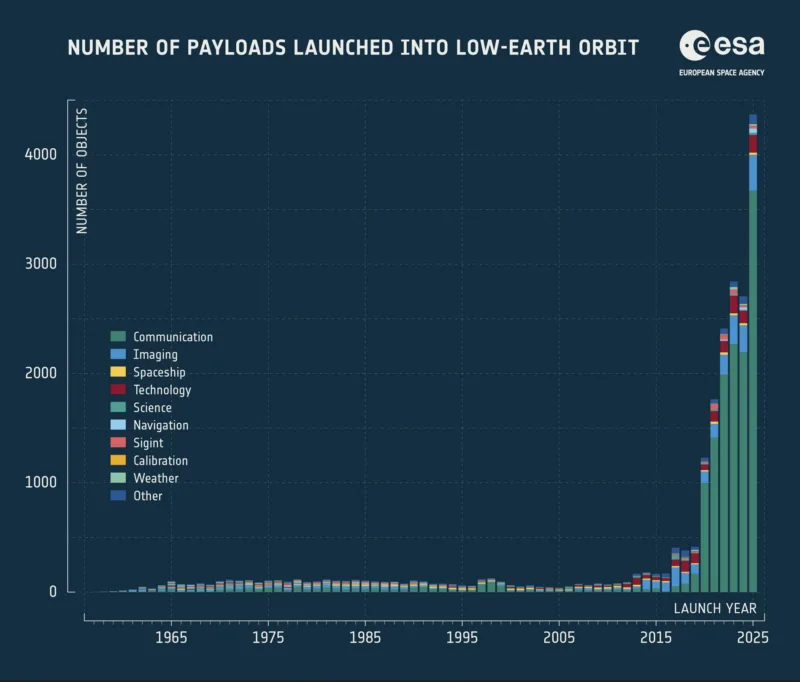
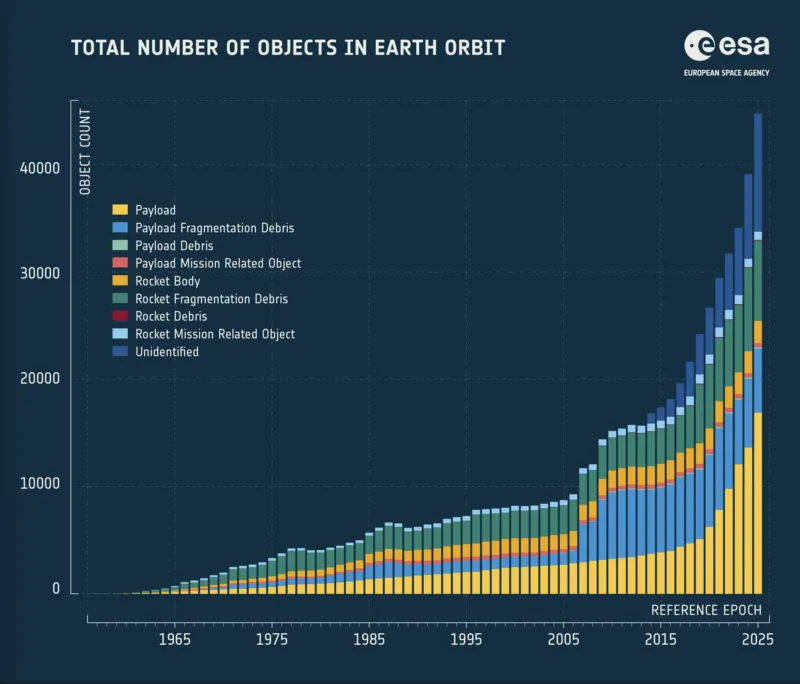
In September 2026, ESA’s Space Debris Office published its annual Space Environment Report. And, as you might suspect, the news is that space — in particular low Earth orbit — is getting more crowded. Here’s a look at the basic numbers as of October 2026 from OrbitalRadar.com:
- 31,000+ total tracked objects in low Earth orbit
- 18,600+ payloads in orbit, working and nonworking
- 15,800+ of those are working satellites
- 10,000+ of the working satellites are Starlink
And, according to ESA, the only place those numbers are going to go is up. ESA, which based its report on data through 2025, outlined some of the biggest concerns:
- The number and scale of commercial satellite constellations continue to increase each year.
- Not enough satellites leave heavily congested orbits at the end of their lives, creating a growing collision risk. The expected number of objects and collisions in low-Earth orbit are skyrocketing in a runaway effect. (Read more: The Kessler syndrome)
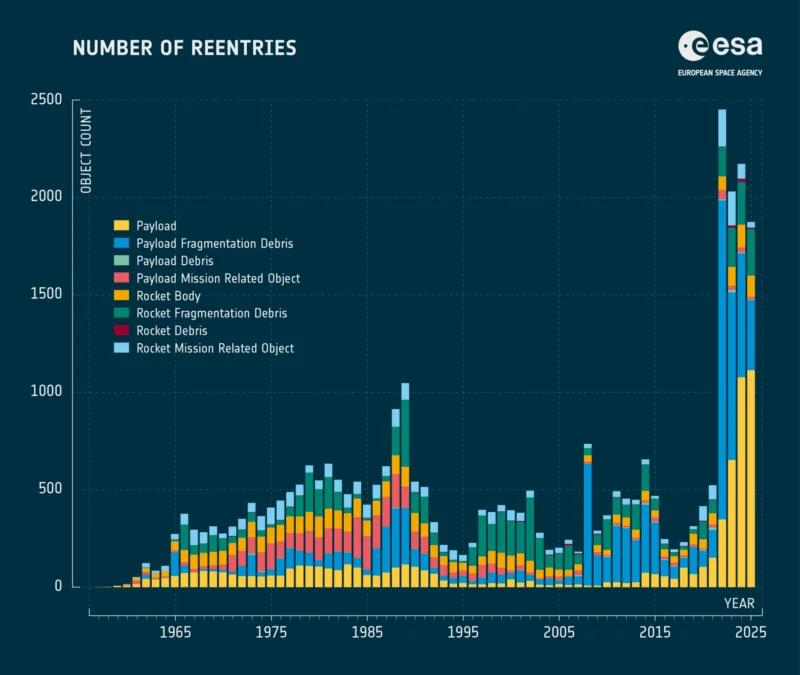
- More than three intact satellites or rocket bodies are reentering every day. Plus, 10 new payloads are launched daily. (Read more: 1 to 2 Starlink satellites are falling back to Earth each day)
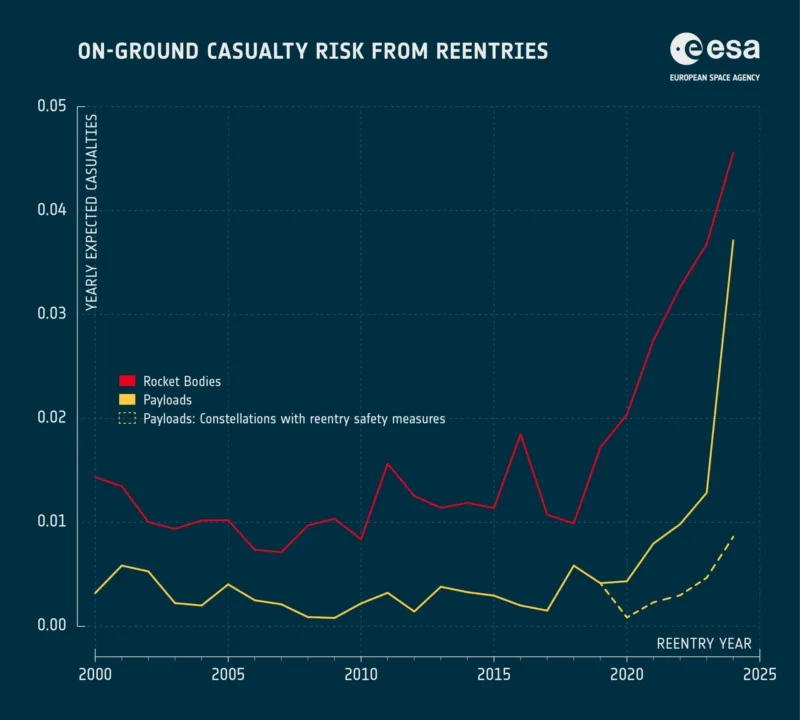
- In 2026, ESA added an on-ground casualty risk of reentries. While the risk is still very low, the chance is still increasing every year due to increased traffic.
Let’s visualize the numbers
Here are some graphics from ESA to help us visualize the numbers of satellites in orbit and being added to orbit.
The pluses and minuses of reentry
Because there are now so many satellites in low Earth orbit, it’s important that they get removed from orbit when they’ve reached the end of their lives. And one of the positive findings of ESA’s 2026 report was that there are more controlled reentries now. That means companies and governments are conducting planned end-of-life disposal of their satellites.
But reentries have drawbacks. As they burn up in our atmosphere, they deposit heavy metals. There are many issues this deposit could lead to, include damaging the ozone layer, affecting the climate and altering the atmosphere’s natural chemistry.
And then, of course, there’s the new metric ESA introduced this year: the risk of casualties on the ground. While you are still much more likely to be injured or killed in a car or on a staircase, the risk of harm from satellite reentry has naturally gone up as the number of reentering satellites goes up. More controlled reentries would help to mitigate this risk.
Space is getting crowded: What are the real risks?
The biggest immediate concern, as we send more and more satellites into low Earth orbit, is that the rising population seems unstoppable. That is, until collisions cascade into more collisions and make the environment unusable.
This idea that satellites will collide and create debris that produces more collisions until we have a runaway cascading effect is called the Kessler syndrome.
As recently as October 5, 2026, LeoLabs detected a satellite breakup in a crowded low-Earth environment. LeoLabs spotted multiple objects near the inactive Meteor 2-7 satellite after it passed over a radar station in Western Australia. Followup observations from other radars confirmed that a debris-generating event occurred. The company called it a:
… worrying trend for space safety and security.
But ESA — along with other space organizations — is working on ways to reduce the risk. This will involve cleaning up orbits and working toward a zero debris solution.
Bottom line: ESA has put out an annual report documenting the state of low Earth orbit. The number of satellites in orbit is skyrocketing, along with the chance for collisions and on-ground casualties.
The post Space is getting crowded. Here’s the latest satellite report first appeared on EarthSky.