← Technology, Science & Infrastructure
▣ Distilled locally
Rotary Phones Aren't Dead Yet, Thanks to Analog Redial
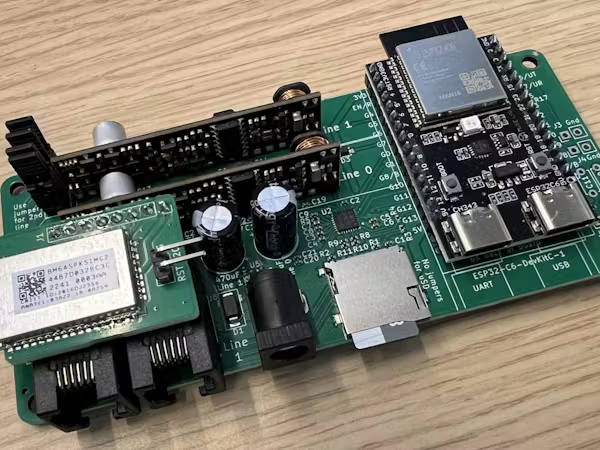
There was a time when making a phone call involved spinning a rotary dial, listening to a mechanical bell ring, and hoping nobody else in the house picked up an extension. Those days are long gone, but there are still plenty of old telephones collecting dust in attics and closets. Rather than letting them go to waste, maker Scott Dylewski has developed a way to bring them back to life — with a few extra modern conveniences. The project, called Analog Redial, is an open source telephone system built around an ESP32-C6 microcontroller. It works with both rotary and touch-tone telephones, providing dial tones, ringing, an answering machine, and calls between connected phones. With optional Bluetooth hardware, an old rotary telephone can also become a fully functional handset for a modern smartphone. The hardware is built around an ESP32-C6 development board paired with an ES8388 audio codec and one or two Silvertel AG1171 Subscriber Line Interface Circuits (SLICs). The SLICs provide the electrical signals that traditional telephones expect, including loop current and ringing voltage. Meanwhile, the codec handles audio conversion, and the ESP32-C6 processes dialing, generates telephone tones, manages calls, and hosts a web-based configuration interface. The system can operate entirely offline, allowing two connected telephones to call each other without Wi-Fi or an external telephone service. Multiple Analog Redial boards can also communicate over a local network using VoIP, while SIP support enables integration with servers such as Asterisk and FreePBX. In addition to making calls, Analog Redial supports customizable dialing codes that trigger different actions. Dialing 211 records a message, for example, while 314 recites digits of pi. Other codes can play audio clips, set timers, or activate connected hardware. Integration with Home Assistant through MQTT or webhooks opens up additional possibilities. A telephone could ring when someone presses a smart doorbell, or dialing a particular number could turn on a light. This functionality is still experimental, however. An optional BM64 Bluetooth module adds smartphone connectivity, allowing users to place and answer cellular calls through their vintage telephones. Incoming calls even activate the original mechanical bell. Dylewski estimates that a basic single-line board costs about $37 to build when ordering five boards, with a second line adding around $10, and Bluetooth roughly $15 more. The project includes KiCad design files, firmware, documentation, and 3D-printable enclosure files. Everything needed to get started is available in the Analog Redial GitHub repository under permissive open source licenses.Analog Redial brings old phones back to life (📷: Scott Dylewski) An overview of the features (📷: Scott Dylewski) A look at the individual components (📷: Scott Dylewski)
↑ Back to top
Originally published by Hackster News ↗
· rebuilt here from its own full-text RSS feed · all rights
remain with the publisher, please read and support them there.