Progress MS-36 set to launch to ISS from Baikonur
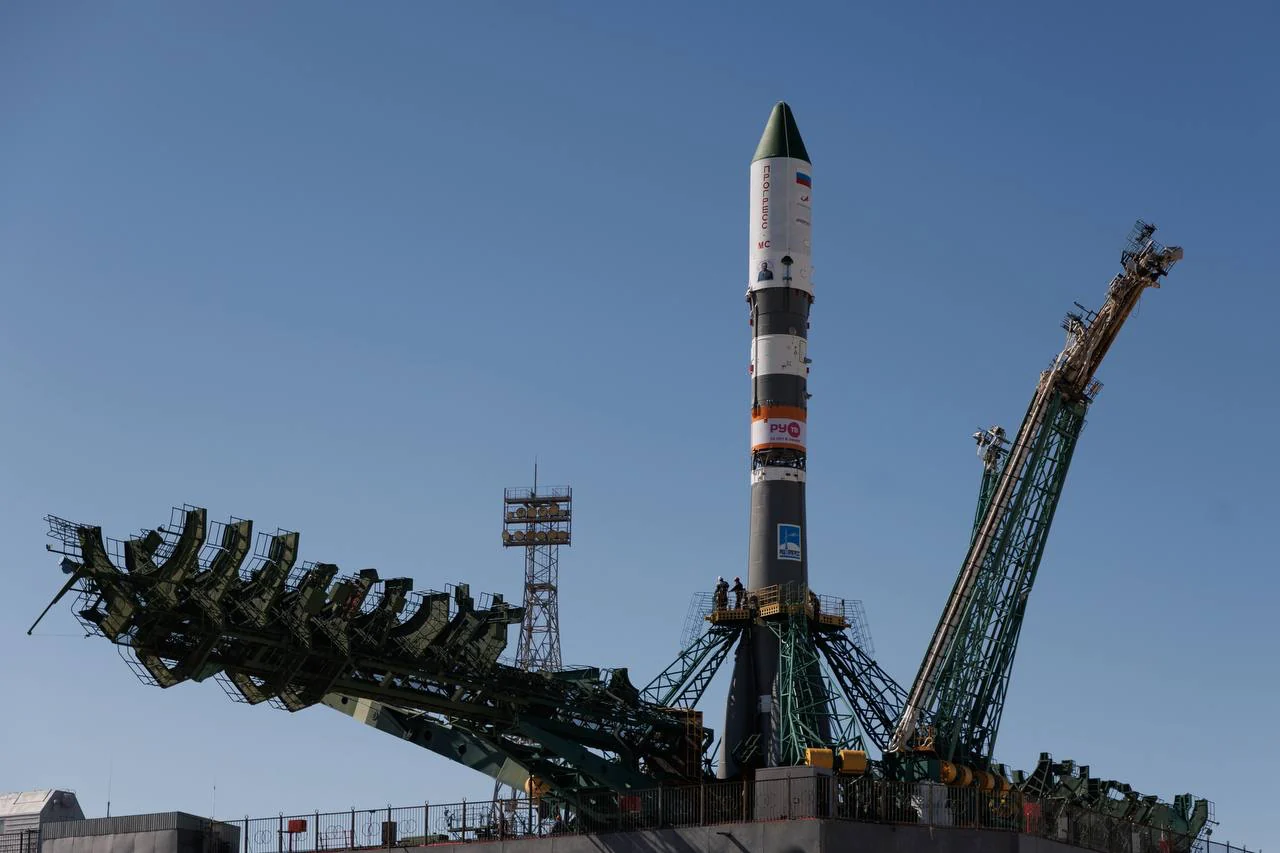
The fourth and final Progress cargo ship resupply mission to the International Space Station of 2026 is set to launch from the Baikonur Cosmodrome in Kazakhstan. Liftoff is scheduled for Tuesday, Nov. 24, at 10:13 UTC from Site 31/6. The Soyuz 2.1b will place Progress MS-36 into the same orbital plane as ISS, and the Progress spacecraft will dock with the Poisk module on the Russian segment roughly 48 hours after launch.
Sometime after the 7,280 kg Progress MS-36 and its roughly 2,500 kg of cargo are unloaded, the spacecraft will move to the International Space Station’s (ISS) Zvezda module; this will be the standard process for all Progress spacecraft moving forward, with MS-36 being the first mission scheduled to use it.
Progress MS-35 currently occupies the Poisk module, while Progress MS-34 is now docked at the Zvezda aft-facing port for reboost, as it is on the Station’s main axis. Rounding out the Russian segment’s visiting vehicles, Soyuz MS-29 is docked to the Prichal module, which is itself docked to the Nauka module.

Progress MS-36 during prelaunch processing. (Credit: Roscosmos)
Progress MS-36 is one of several cargo ship arrivals and departures on ISS this week. CRS-35 successfully undocked and splashed down earlier this week, while Progress MS-34, loaded with trash and scheduled to depart from the Zvezda module, is set to deorbit soon. Presumably, Progress MS-35 would move over to the Zvezda aft port, freeing up Poisk for Progress MS-36. In addition, the Cygnus cargo ship S.S. James A. (“Jim”) Lovell is now set to fly on Sunday, Nov. 29, on mission CRS NG-25 aboard a Falcon 9.
See Also
The Progress spacecraft is carrying 1,400 kg of dry cargo, which includes food, clothing, medicine, and scientific equipment. MS-36 is also carrying 420 kg of water and life-support supplies, as well as fuel for reboost burns, plus oxygen and nitrogen. This spacecraft is also using a modified propellant tank isolation valve as a way to validate components to be used in future hardware.
There are typically three to four Progress missions per year, but a serious incident at Site 31/6 during the Soyuz MS-28 launch in November 2025 caused a months-long delay in launches from the site. Technicians installed a replacement mobile service platform built during Soviet times, which allowed flights to resume with the Progress MS-33 mission on March 22.
Roscosmos has also dramatically reduced its coverage of the upcoming mission and its other launch campaigns. The NASA ISS Orbit File Data major events list is also gone for now. It is thought that recent developments in the war in Ukraine are behind this curtailment.
A Soyuz rocket with the Progress MS-36 spacecraft should now be on launch pad at Baikonur for an ISS launch Tuesday, but Roskosmos dramatically curtailed coverage of all its launch campaigns, likely as a result of Russia's worsening quagmire in Ukraine: https://t.co/q736lGhbsF pic.twitter.com/jX9FAwCVqX
— Anatoly Zak (@RussianSpaceWeb) November 22, 2026
The reason for the aforementioned change in docking procedure was a decision by the Station partner countries to permanently close the PrK airlock between the Zvezda module’s hull and the docking port due to chronic air leaks and microcracks that have developed over the past several years. This decision was taken in June 2026.
Numerous attempts to isolate the leaks did not work, and the leaks grew larger in May and June 2026. Roscosmos initially wanted to perform a structural repair which involved cutting a bracket, but NASA ordered its astronauts to take shelter in a Crew Dragon if this repair took place. The repair was never performed.
In addition, a NASA risk matrix showed the PrK leaks at the highest level, with a red five-by-five: five for likelihood and five for consequence. The Zvezda service module, based on the Mir base block, was launched in 2000. The Mir base block module flew for 15 years, from 1986 to 2001, before it was deorbited, making it the longest a module of this type has been in orbit.

Closeup of a Progress spacecraft docked to the aft port of Zvezda. (Credit: NASA)
The permanent closure of the PrK is an example of the Station showing its age. It is supposed to be retired by 2031, but NASA Administrator Jared Isaacman hinted at a possible extension, stating that he did not want a gap between the ISS and a commercial space station.
Progress MS-36 will be the 10th Soyuz 2.1b launch of 2026 and the 109th mission overall for the rocket. While the International Space Station continues to orbit Earth with a crew on board, Progress flights will continue, along with other cargo resupply missions from the United States and Japan.
(Lead image: A Soyuz 2.1b rocket with a Progress spacecraft on the launch pad. Credit: Roscosmos)