NASA navigation experiment shows promise for planetary landings
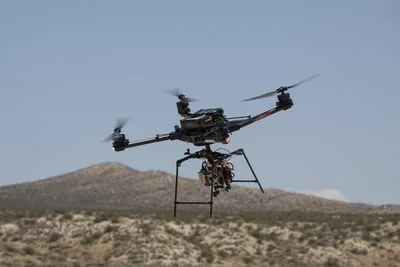
Armstrong Communications reports on NASA’s site that the agency has flown a landing guidance system on a drone over Rogers Dry Lake, near NASA’s Armstrong Flight Research Center in Edwards, California. An Alta-X drone carrying the Safe and Precise Landing, Integrated Capabilities Evolution (SPLICE) payload ran simulated lunar descent and landing maneuvers on August 27.
SPLICE maps the ground below using light-detection and sensor data, builds high-resolution digital elevation maps, and checks whether the target landing spot is safe. If it isn’t, the system sends the vehicle somewhere better. NASA’s Johnson Space Center built the payload, and Armstrong staff integrated, tested, and flew it in June and July. Those flights checked communications, data handling, telemetry, and command and control before a full-scale test at Voyager Technologies in Mojave, California.
“This flight test is the culmination of almost a decade of work for the SPLICE project,” said NASA project manager Davis Adams. He said the results apply to terrestrial, lunar, and Martian descent and landing. NASA plans to put the guidance system in its software catalog this fall, and some companies are looking at it for precision landing and autonomous surface mobility.
See more at nasa.gov.